Elastic Paint — Liquid Rubber for Cracking Surfaces
Elastic paint isn't a marketing label — it's a measurable technical property. The European standard EN 1062-7 grades coatings on how much crack they bridge: A1 bridges 100 µm hairlines, A5 bridges 2,500 µm structural cracks. Liquid rubber from RubberPaint forms a crack-bridging membrane that follows substrate movement without failure — exactly the property that breaks rigid alkyd paints within 2–3 seasons on outdoor wood, masonry and concrete.
Why elasticity matters outdoors
Every outdoor surface moves. Timber swells in autumn and shrinks in summer with moisture changes; concrete and brick expand and contract with temperature; steel and aluminium can change in length by several millimetres per metre across the British seasonal temperature range. A rigid paint film cannot accommodate that movement — micro-cracks open, water penetrates, the film lifts and flakes.
An elastic film stretches with the substrate and recovers without losing adhesion. The cured RubberPaint film recovers from elongation up to several hundred percent of its original length and maintains that elastic behaviour from −20 °C to +50 °C — the full British outdoor temperature range.
Where elastic paint pays off
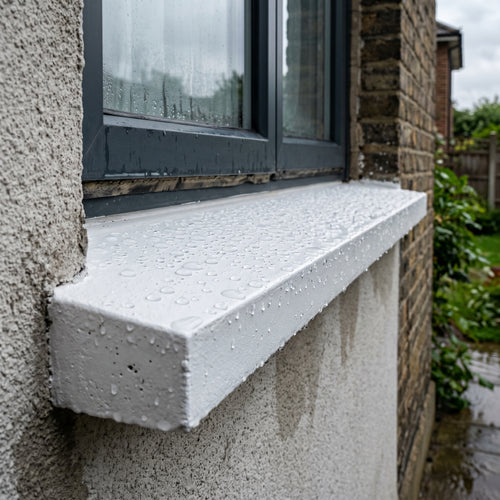
- Façades with hairline cracks — render and brickwork with movement micro-cracks from settlement or temperature. The elastic film bridges and seals the crack while staying breathable.
- Plinths and retaining walls — masonry below ground level where settlement movement is highest. Crack-bridging membrane prevents water ingress through micro-fractures.
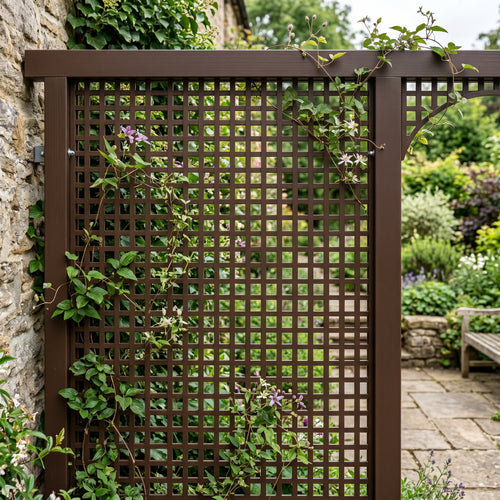
- Wood cladding and fencing — moves with seasonal swelling and shrinking; rigid paint cracks, elastic paint follows.
- Concrete elements — exposed concrete blocks, stairs, walls where thermal expansion is significant.
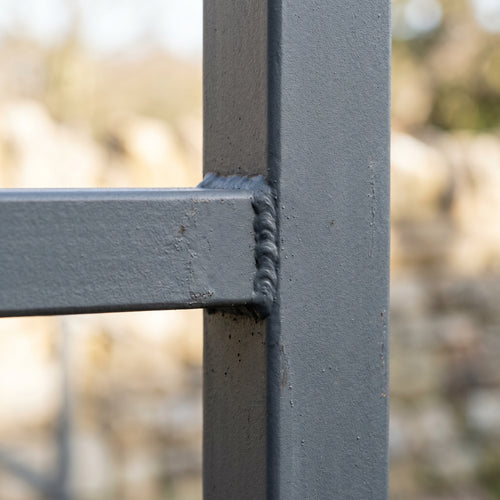
- Metal fabrications — gates, railings, beams where thermal length change can be measured in millimetres per metre.
Crack-bridging in numbers
| Property | RubberPaint | Standard alkyd paint |
|---|---|---|
| Elongation at break | Several hundred % | 5–10 % |
| Crack-bridging | Yes, even at low temperatures | No |
| Service temperature | −20 °C to +50 °C | Embrittles below 5 °C |
| Breathability (water vapour) | V2 per EN 1062-1 (open) | Often closed (traps moisture) |
Application matches any surface
RubberPaint elastic paint is applied cold with brush, roller or airless spray. Two cold-applied coats at 100–200 g/m² per coat build a continuous elastic membrane — no torch, no specialist gear, no fumes. Tool clean-up with water. 14 RAL colours direct from stock.
For specific application by substrate (façade, fence, balcony, basement, metal) see the dedicated Application pages or use the Material calculator for exact tub quantities.