Plinth Waterproofing — Liquid Rubber for House Bases
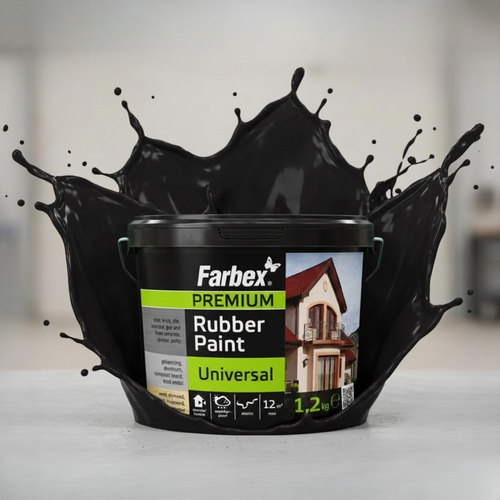
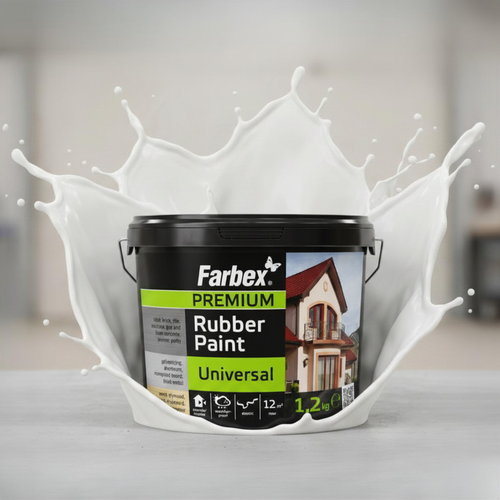
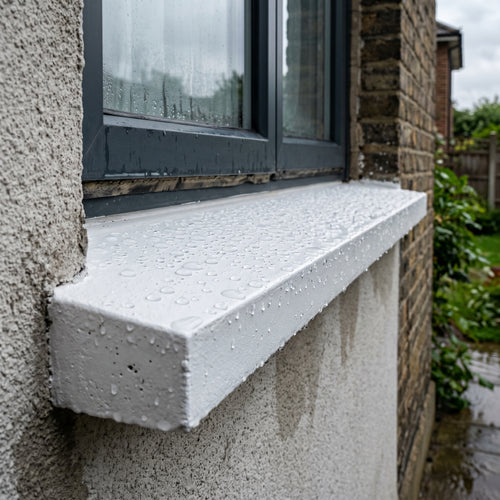
The plinth — the lower 30 cm to 1.5 m of any external wall — takes the heaviest weather load on a house. Splash water rebounds from paths and patios, ground moisture rises from the soil, and frost cycles loosen any non-elastic finish. Liquid rubber plinth waterproofing forms an elastic, breathable, salt-tolerant membrane that protects the base of every house from rising damp and frost damage.
Why the plinth needs special protection
The plinth is exposed to weather conditions that the rest of the façade isn't:
- Splash water — rebounds from paths, patio paving and gravel up to 30 cm above ground level
- Salt deposits — road salt in winter and natural ground salts in soil deposit on lower walls
- Ground frost — water freezing in masonry pores expands and cracks rigid coatings
- Rising damp — moisture from soil moves up through capillary action in non-protected brick or render
- Mechanical impact — lawnmowers, garden tools, vehicle bumpers, children playing
What liquid rubber gives you
- Elastic crack-bridging — bridges hairline cracks from frost and settlement
- Salt-tolerant — doesn't lift off when underlying salt deposits push outward
- Breathable — V2 per EN 1062-1, so trapped moisture escapes outward
- Waterproof outwards — W3 per EN 1062-1, blocks splash water and surface rain
- UV-stable — colour fastness on the visible top of the plinth tested to ISO 16474-2
Material needed for a typical house
For a typical detached house with 40 m of perimeter × 0.5 m plinth height = 20 m² of plinth surface:
- Consumption on brick/concrete plinth: 0.34 kg/m² × 20 = 6.8 kg + 10 % = 7.5 kg
- Recommended tubs: 1 × 6 kg + 1 × 3.5 kg = 9.5 kg
- Material cost: £69 + £39 = £108
Colour choice for the plinth
The plinth is the highest-wear visible section of any house. Popular UK choices:
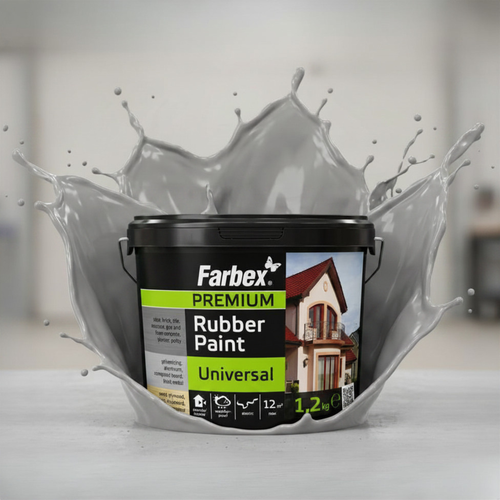
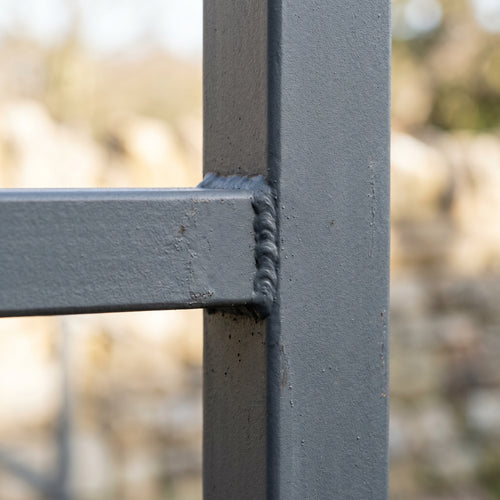
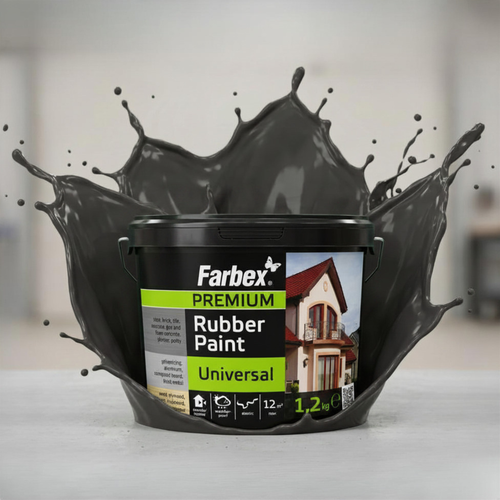
- Anthracite RAL 7024 — most popular for modern architecture, hides dirt and splash marks
- Black RAL 9005 — traditional contrast with light-coloured house render
- Dark grey RAL 7016 — softer than anthracite, fits older houses
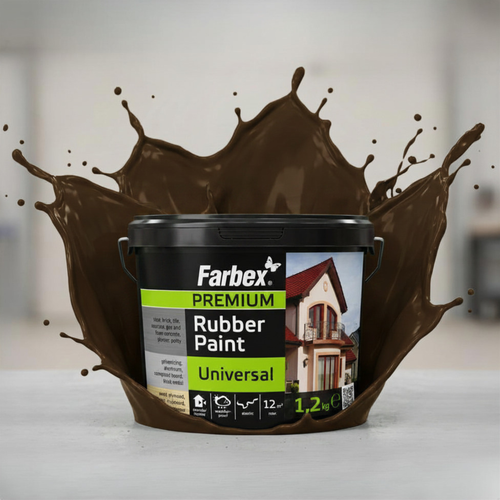
- Brown RAL 8017 — for traditional brick-built houses
Step-by-step application
- Clear vegetation 30 cm above ground line. Excavate soil away from the plinth surface by 10–15 cm if practical (for a longer-lasting clean line).
- Clean the plinth surface — wire brush off loose render, jet wash, allow to dry thoroughly (48–72 hours dry weather minimum).
- Repair any cracks > 3 mm with cement-based filler.
- Apply first coat undiluted with 50–75 mm brush at 180 g/m². Work into masonry joints and around any drainage features.
- Allow 4 hours minimum to dry, longer in cool conditions.
- Apply second coat crosswise at 150 g/m². Even coverage, no thin spots.
- Refill excavated soil after 48 hours of dry weather.
Next steps
For the basement-wall variant of this work (interior moisture protection) see our Basement waterproofing landing page. For exterior concrete coating in general see Concrete paint for exterior.