UV-Resistant Paint — What Actually Lasts Outdoors

UV-resistant paint is more than a marketing label. Sunlight degrades different coating chemistries at very different rates, and the difference between a paint that lasts 3 years and one that lasts 15 outdoors comes down to the binder chemistry, the pigment package and the film thickness. This article unpacks which paints actually last in UV exposure, which fail early, and why.
What UV does to a paint film
Ultraviolet light from the sun has more energy per photon than visible light. When it hits a paint film, the high-energy photons break chemical bonds in the polymer backbone. The result is called photodegradation: chains shorten, the film loses flexibility, pigments fade, and over time the surface chalks and the film becomes brittle.
Different binders resist UV differently:
- Alkyd resins (traditional oil-based gloss) — yellow and embrittle quickly outdoors. Lifespan 2–4 years on south-facing surfaces.
- Acrylic dispersions — much better UV stability, the standard outdoor binder. 5–8 years on exterior masonry, longer in shade.
- Acrylic-latex (with rubber-modified elasticity) — the chemistry behind liquid rubber. Elastic and UV-resistant, tested to ISO 16474-2.
- Silicone-modified acrylic — excellent UV resistance, used on premium façade paints.
- Polyurethane (PU) — very good UV resistance in aliphatic grades, less good in aromatic grades.
- Epoxy — chalks badly under UV; usually used as a primer under a UV-stable topcoat.
How liquid rubber holds up
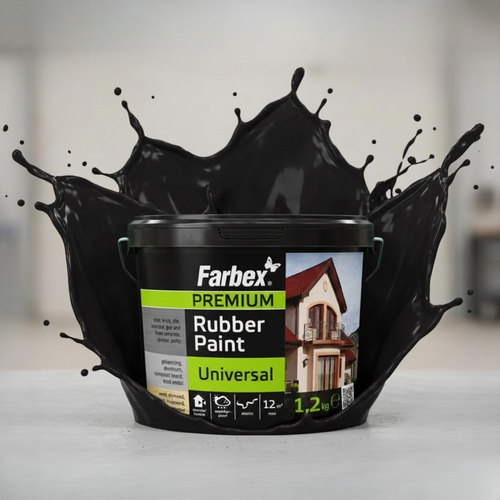
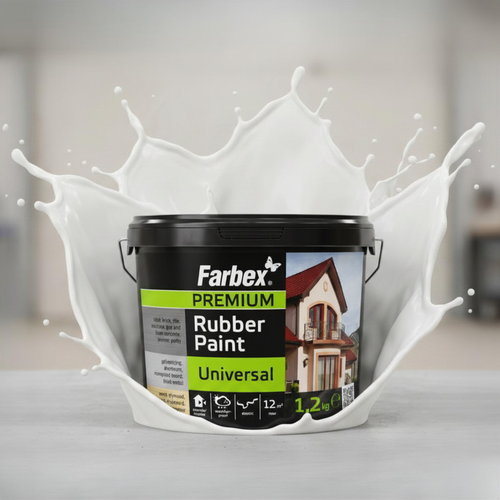
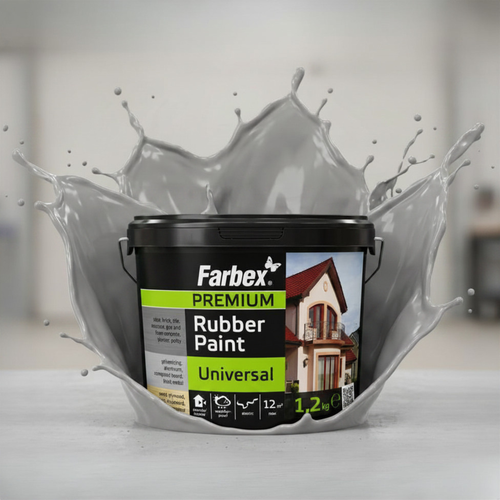
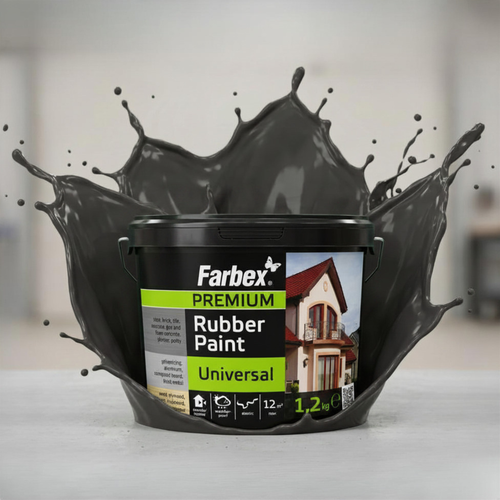
RubberPaint Universal is an acrylic-latex water-based system. The binder chemistry is specifically designed for sustained UV exposure, and the formulated film has been tested per ISO 16474-2 (xenon arc accelerated weathering). Key findings:
- Colour change Delta-E after 2,000 hours xenon exposure remains within typical exterior coating tolerances
- Gloss retention drops gradually over time but no sudden collapse
- Surface chalking minimal compared with conventional alkyd
- Crack-bridging elasticity preserved — the cured film stays flexible
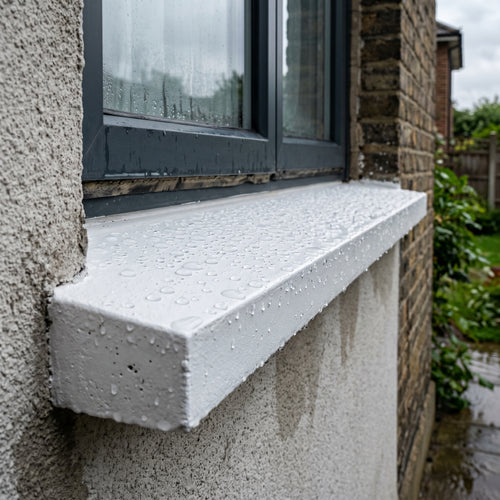
In real-world UK conditions, this translates to 5–7 years on south-facing surfaces before the first refresh coat is recommended, and longer on sheltered or north-facing elevations.
Colour fastness — which RAL shades hold best
Dark and chromatic-stable RAL shades resist visible fading best. Light highly-saturated shades (some reds, oranges, bright yellows) show the most visible colour shift after years of UV exposure.
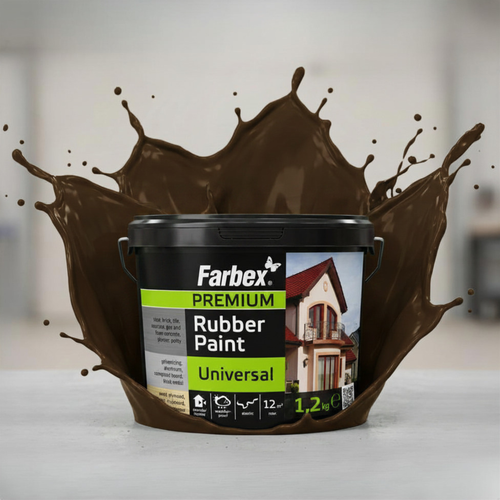
- Excellent UV stability: Black RAL 9005, Anthracite RAL 7024, Dark Blue RAL 5011, Brown RAL 8017, Cherry Red RAL 3005
- Good UV stability: White RAL 9003, Grey RAL 7046, Beige, Green RAL 6005
- Acceptable UV stability with mild fade: Light Blue, Yellow, Light Green
For weather-side elevations (south, south-west in UK), choosing a darker shade extends the visible-condition life of the coating.
Refresh approach extends total lifespan
Unlike traditional alkyd paint where UV failure means a full strip-and-recoat, liquid rubber refresh is a single over-coat. After 5–7 years on weather-exposed sections, rinse the surface, allow to dry, and apply one fresh 150 g/m² coat. The new film bonds invisibly into the existing membrane, restoring full UV-stable thickness.
That refresh model means total system lifespan can extend to 15+ years with one or two intermediate refresh coats — a fraction of the cost of full reinstatement with traditional systems.
Next steps
To work out the material needed for your specific surface, use the Material calculator. For Façade application background see the Exterior wall paint landing page. For the wider weatherability framework see Exterior surface protection.
RubberPaint Team
Technical editorial · RubberPaint