Mould & dark patches
Damp areas of wall become a breeding ground for mould. Black spots, a musty smell, airborne spores — leading to respiratory problems and allergies.
RUBBERPAINT
local_shipping
Free shipping from £199.00
trending_up
Only £199.00 until free shipping!
check_circle
Free shipping unlocked! 🎉
bolt
Shipping in 24 h after payment

Elastic interior coating for damp basement walls. Stops mould growth, protects the building fabric and stays vapour-permeable — the masonry can keep breathing while water is reliably blocked.
Basement waterproofing with liquid rubber gives reliable protection against rising damp, ground water and efflorescence — inside or outside. The elastic membrane bridges fine settlement cracks and stays breathable, so moisture in the wall can still escape. Applied cold in 2 coats, with no torch work and no harsh-smelling solvents.
Damp basement walls aren't a cosmetic problem — they destroy building fabric, encourage mould and endanger occupants' health. The longer you wait, the more expensive the refurbishment.
Damp areas of wall become a breeding ground for mould. Black spots, a musty smell, airborne spores — leading to respiratory problems and allergies.
White crystalline deposits on the wall signal rising damp. The salts spall the render from the inside — classic paints get pushed off under the pressure.
Even without visible mould, lasting moisture changes indoor air quality. Occupants report headaches and difficulty concentrating — the basement goes unused, property value drops.
Water vapour can pass from the inside out, while liquid water is blocked. No moisture trapped behind the coating, no blistering.
Holds up against the pressure of salt efflorescence. Unlike emulsion paints, the elastic membrane will not lift off when salts push out through the masonry.
Follows settlement cracks without splitting. The waterproofing stays intact even with small movements in the masonry.
Water-based with fungicidal additives — offers no foothold for mould. The closed surface can be wiped down whenever needed.
Remove loose spots without compromise.
Mechanically remove loose and spalled render — down to sound masonry. Fill out with concrete repair mortar or renovation plaster, let cure for 7 days. The wall must be sound, clean and dust-free before further treatment.
With massive damage (> 5 % of the area) consult a masonry specialist — interior coating alone won't be enough here.
Pro tip: Apply a salt-blocking primer before filling — prevents rising salts from later blasting the repair apart.
The invisible brake.
Brush salt crystals off dry — never wash, because water only dissolves the salts briefly and they come back. Then apply a salt-blocking primer to stop migration. With mould: use a commercial mould remover, let act for 24 h, rinse thoroughly, dry for 48 h.
Wall moisture must be below 4 % before further treatment — at higher moisture fix the cause first.
Pro tip: Mould is a symptom, not a cause — find the moisture source (condensation, leaky wall, missing drainage) and fix that first, otherwise mould returns.
Hydrophobising deep primer.
On strongly absorbent or damp substrate apply a hydrophobising deep primer. This stabilises the render and improves coating adhesion. Let dry for 12 h before further work.
On stable, dry substrate primer can be skipped — proceed directly to Step 4.
Pro tip: In basements with condensation problems, dry with a building dehumidifier for 1–2 weeks before starting — otherwise residual moisture keeps working under the coating.
Dilute with 5 % water.
Work in the first coat generously with brush or lambswool roller — slightly diluted with up to 5 % water for deep penetration. Consumption 150–200 g/m². At settlement cracks or wall-to-floor transitions, embed reinforcement fleece (60 g/m²) into the wet coat and roll flush with a press roller.
Go over corners and connections multiple times — the fleece must be fully saturated.
Pro tip: In damp corners first pull a narrow concrete fillet, then reinforce with fleece — water then runs off instead of collecting in the corner.
Undiluted, full coverage.
After 6–8 h drying apply the second coat undiluted. Consumption 100–150 g/m². Cured and safe against rising damp after 28 days. Until then, ventilate the room with low humidity — a building dehumidifier is recommended.
Against pressurised water (groundwater, hillside) interior coating alone is not enough — additional exterior waterproofing required.
Pro tip: In intensively used basement rooms a third coat is recommended — nearly doubles service life and provides extra reserve against micro-cracks.
Against pressurised water (groundwater, hillside positions) interior coating alone is not enough — exterior waterproofing is also required. Interior coating with RubberPaint works reliably against diffuse moisture, condensation and light ingress.
Enter your area and desired number of coats — we recommend the optimum tub combination.
Standard: 2 coats. 3 for heavily exposed surfaces.
Consumption: 200 g/m² per coat. +10 % buffer for offcuts and uneven surfaces. For larger projects (> 80 m²) contact us for individual advice.
Recommendation
—
Calculating…
Free shipping from £170 — review your basket after adding.
Light shades make the most of the available light in a basement — white is the standard for habitable rooms, with grey and graphite for hobby and workshop areas. Reserve black for plinth zones.
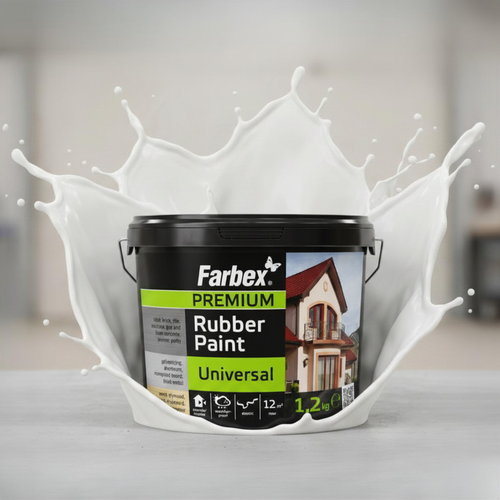
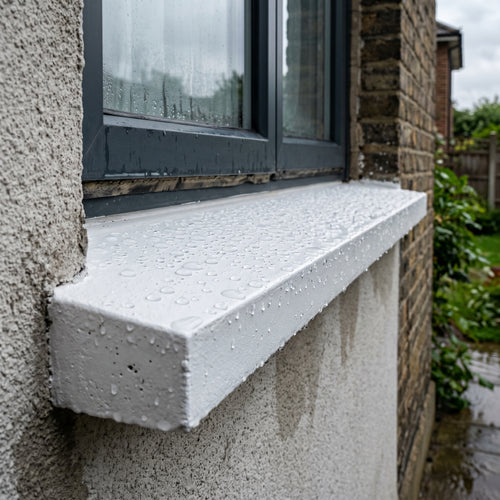
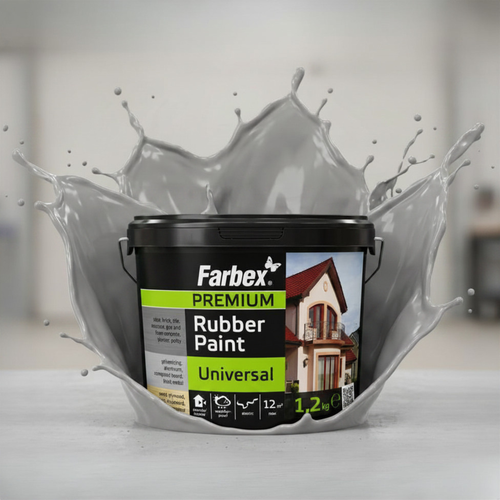
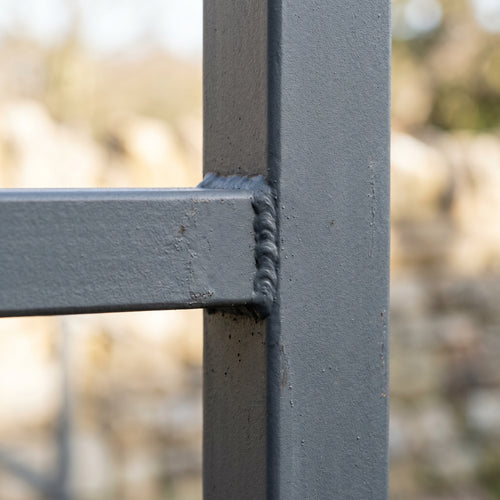
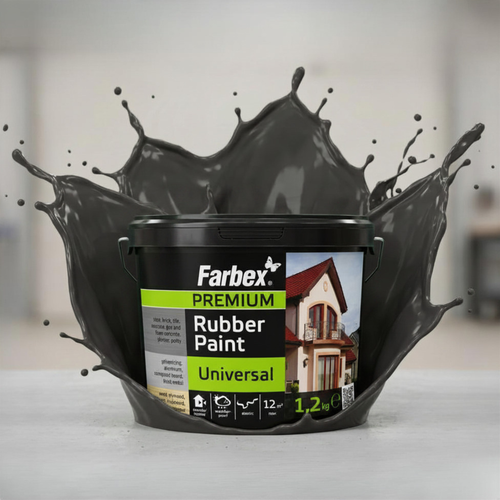
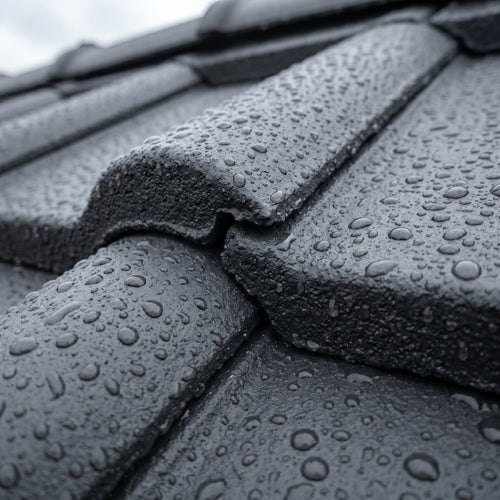


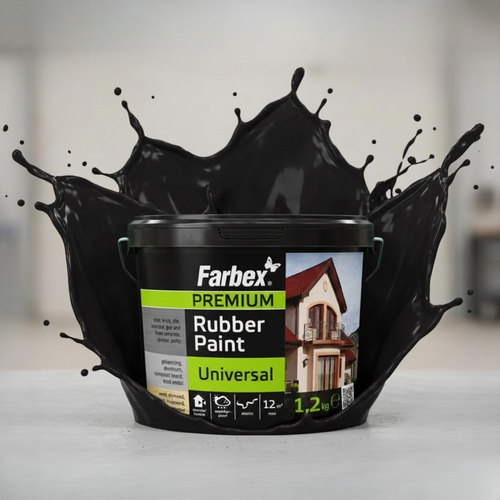
Damp basement? External waterproofing with liquid rubber / liquid rubber paint protects the masonry from ground moisture for the long term. A cold-applied protective layer replaces laborious waterproof slurry systems.
Liquid rubber (also called rubber paint, rubberised paint or flexible coating) bonds to concrete, masonry and render. It stays elastic and bridges fine cracks. A 2-coat application with reinforcing fleece at the wall-footing junction creates a seamless barrier against ground moisture.
For 2 coats on absorbent concrete: 0.4–0.5 kg/m². For a 40 m² basement wall ≈ 18 kg (1 × 6 kg + 3 × 3.5 kg plus reserve).
Below ground the colour is invisible. We recommend Black (RAL 9005) as the neutral standard.
For ground moisture and non-pressing water (German standard DIN 18533-1, water exposure class W1.1-E), yes. Pressing water has to be planned separately.
Down to the base of the foundation — approx. 1.5–2.5 m for a typical detached house.
If the old coating is firmly bonded, yes, after thorough cleaning. Remove any loose areas.
28 days after the last coat, with a protective or drainage board in front of the wall.
Ready to start? Choose your colour and tub size.
Go to the shop → · Application overview · FAQ
Related terms: Our product is sold in DIY stores and the trade under several names — liquid rubber, liquid rubber paint, liquid membrane, rubber paint, rubberised paint, flexible coating, elastic exterior paint or polymer coating. They all mean the same product: a waterproof, highly elastic coating based on acrylic latex.
The same elastic liquid-rubber coating for many more applications — explore all use cases.

waterproof

paint
waterproof
waterproof

Exterior paint

paint
Rust protection
Coating
Our technical team advises on complex applications, substrate analysis and film-thickness calculation.