Industrial Protective Coating — Liquid Rubber for Plant & Steel

Industrial plant protection — steel structures, tanks, machinery, factory roofs — needs coatings that handle extreme conditions: continuous UV, thermal cycling, mechanical impact, chemical exposure and salt-laden coastal atmospheres. Liquid rubber as an industrial protective coating offers a credible alternative to traditional epoxy or polyurethane systems where the substrate moves, where DIY-friendly cold application matters, or where downtime needs to be minimised.
Typical industrial applications
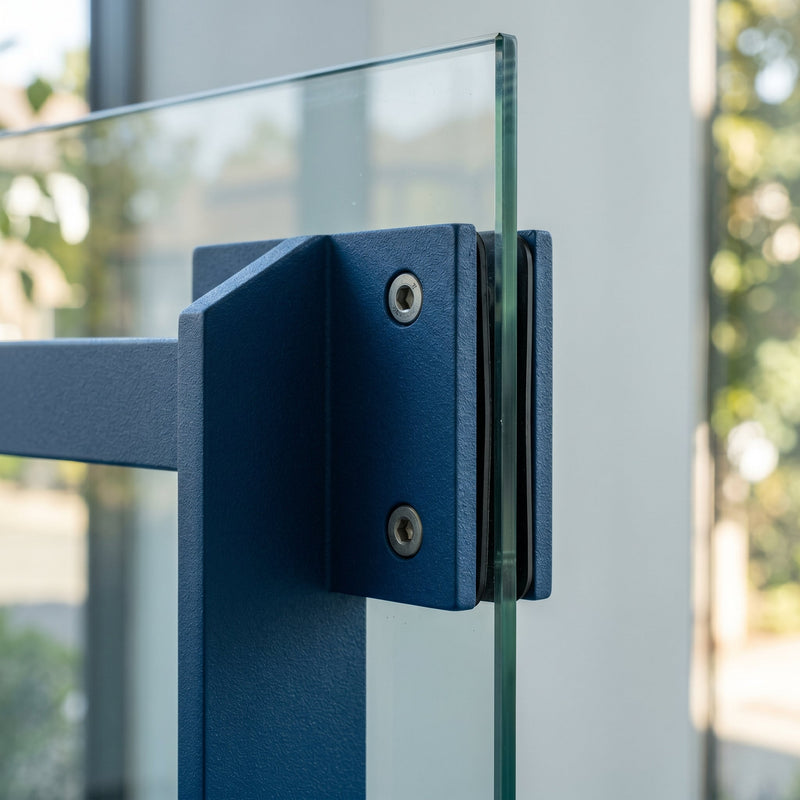
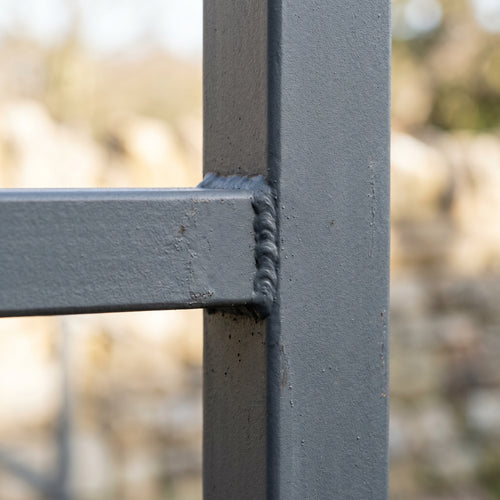
- Steel structures and beams — load-bearing frames, columns, gantries. Liquid rubber bonds direct-to-rust after a phosphoric-acid rust converter pre-treatment, providing an elastic corrosion barrier that follows thermal length change without cracking.
- Storage tanks and silos — non-pressurised water tanks, oil tanks, propane and LPG storage. The coating handles direct UV and mechanical impact while staying solvent-free for safer cold work.
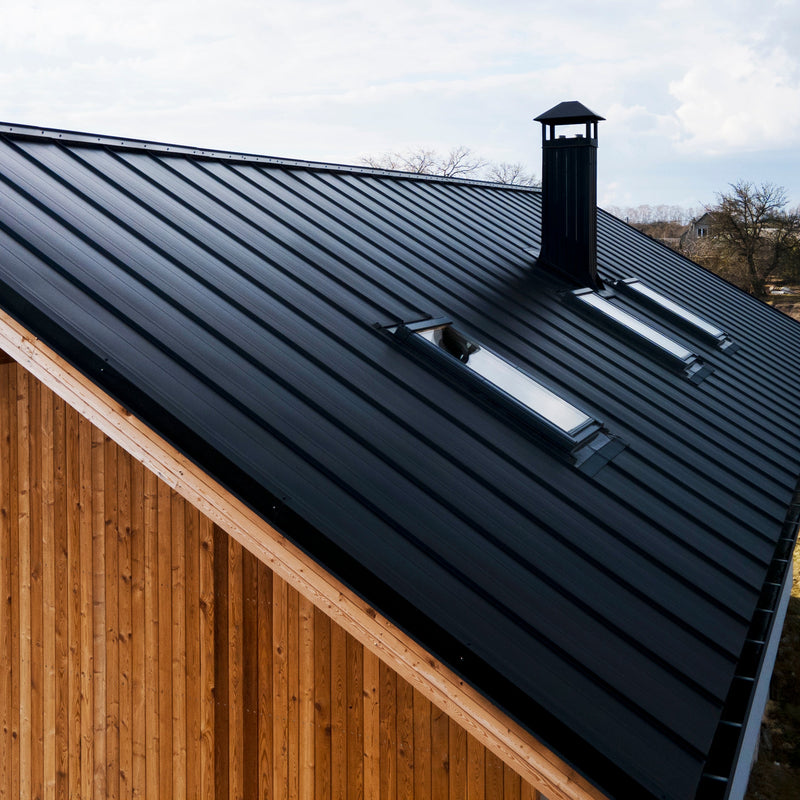
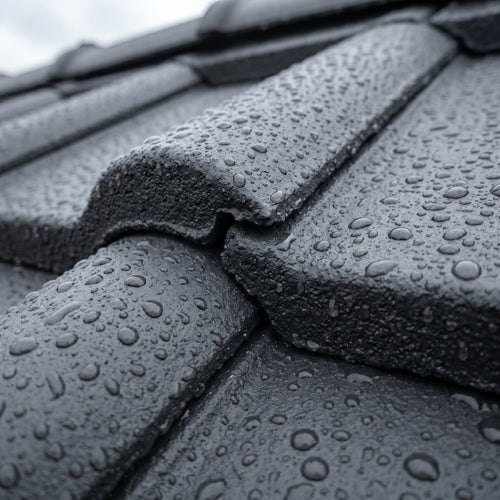
- Industrial roofs — corrugated iron, steel deck, asbestos-cement panels (encapsulation use only). Cold spray or brush application avoids fire risk in production environments.
- Machinery housings and ductwork — outdoor heat exchangers, HVAC plant, exhaust ducting. Elastic film bridges micro-cracks at welded joints.
- Concrete plant elements — retaining walls, foundation plinths, cooling-tower bases. V2-classified diffusion-openness lets residual moisture escape outward.
Advantages over traditional industrial paints
| Property | Liquid rubber | Epoxy / PU industrial |
|---|---|---|
| Solvent content | Water-based, low VOC | High VOC, ventilation required |
| Pot life | Single component — open tub stays usable | 2-component, 30–60 min pot life after mixing |
| Elasticity | Bridges thermal movement and welded-joint cracks | Rigid — cracks under substrate movement |
| Application | Cold, brush/roller/airless, no hot work | Some grades need preheat or hot spray |
| Tool clean-up | Water | Solvents (xylene / MEK) |
| Maintenance | Refresh coat bonds invisibly | Sand back to substrate, recoat full system |
Technical specifications for industrial use
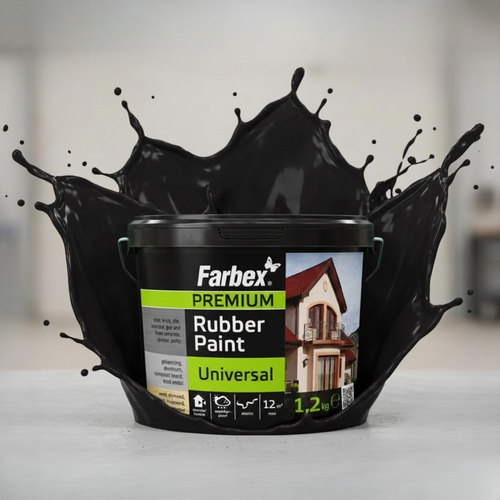
RubberPaint Universal liquid rubber has been formulated for sustained exterior exposure and meets these key industrial-relevant properties:
- Service temperature: −20 °C to +50 °C — covers full UK / continental European outdoor range
- Water vapour permeability: V2 per EN 1062-1 (60–70 g/m²·day) — substrate moisture escapes outward
- Water permeability: W3 per EN 1062-1 (low) — wind-driven rain held out
- UV resistance: tested per ISO 16474-2 xenon arc — colour fastness assessed over accelerated weathering
- Abrasion class: Class 1 per EN 13300 — withstands regular cleaning and brushing
- Solids content: 55 % — controllable dry film thickness with standard tools
- Storage life: 36 months in unopened tub at +5 °C to +35 °C
For specific chemical-resistance data (oils, fuels, cleaning agents) or fire-retardant grades, request the full Technical Data Sheet and Safety Data Sheet via info@rubber-paint.de.
Procurement for B2B / large projects
Project deliveries from 50 kg upward qualify for project-specific pricing. Standard delivery is by UPS pallet from our central European warehouse, dispatched the same working day for orders placed before 14:00. For larger consignments we organise dedicated freight at quoted rates.
Required information for a project quote:
- Total surface area in m² and substrate type
- Number of coats specified (typically 2 for indoor, 3 for outdoor/severe exposure)
- Colour preference (14 standard RAL shades from stock, custom tints on request)
- Delivery address and any installation-time constraints
- Optional: Technical Data Sheet and Safety Data Sheet for specification review
For project enquiries email info@rubber-paint.de or use the B2B form. We typically respond with a quote within one working day.
Conclusion
For industrial protective coating projects where elastic crack-bridging, cold application and lower lifecycle cost matter more than absolute chemical resistance, liquid rubber is a credible and cost-effective option. It particularly suits steel-structure refurbishment, exterior tank coating and large industrial roof refurbishment over old felt or corrugated iron.
For more on the underlying technology and the certification framework, see our Metal protection landing page or the article Liquid rubber vs EPDM.
RubberPaint Team
Technical editorial · RubberPaint