Abrasion-Resistant Paint — Class 1 per EN 13300 for Bathrooms

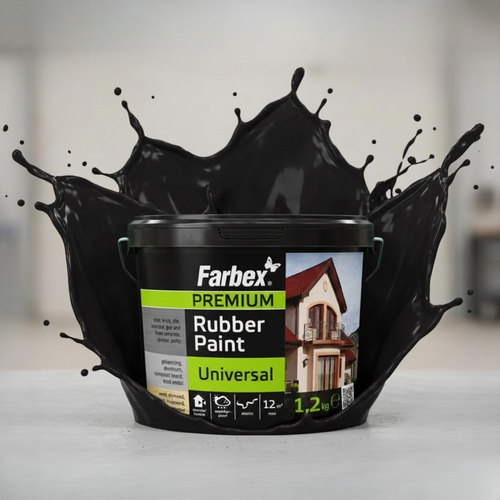
Wash-resistant paint matters in any room that gets dirty: bathrooms, kitchens, hallways, school corridors, and stairwells. The European standard EN 13300 classifies interior paints by their wet-wear resistance, from Class 1 (highly resistant) down to Class 5 (low resistance). Liquid rubber from RubberPaint achieves Class 1 — the top wash-resistance rating — making it suitable for the most demanding interior applications.
What EN 13300 Class 1 actually means
EN 13300 measures how much paint film is lost when a standardised brush rubs the surface under controlled wet conditions. The standard defines five classes:
| Class | Wet-wear resistance | Suitable for |
|---|---|---|
| Class 1 | ≤ 5 µm loss after 200 cycles | Bathrooms, kitchens, hallways, hospitals, schools |
| Class 2 | ≤ 20 µm loss | Living rooms, offices, bedrooms with cleaning |
| Class 3 | ≤ 70 µm loss | Standard living areas, occasional cleaning |
| Class 4 | > 70 µm loss | Light-use bedrooms |
| Class 5 | Variable | Decorative wash-and-replace |
Class 1 is the highest rating — it represents paint that survives the kind of routine wet cleaning needed in bathrooms (hot water, mild detergent, scrubbing brush), kitchens (cooking residue removal), and high-traffic public areas.
Where wash-resistant paint pays off
- Bathrooms — splash zones around the basin, areas above the bath, walls behind the toilet. Class 1 paint survives years of weekly cleaning without showing wear marks.
- Kitchens — walls behind the cooker, splashback areas, around the sink. Cooking grease cleans off without lifting the film.
- Hallways and stairwells — bag bumps, shoe scuffs, hand marks. Class 1 lets you wipe rather than repaint.
- School corridors and offices — high traffic with regular caretaker cleaning. Maintenance interval extends from years to a decade or more.
- Hospital corridors and clinic walls — disinfectant-resistant surface that holds up to chemical cleaning protocols.
Why liquid rubber achieves Class 1
Three factors combine in the liquid rubber formulation:
- Elastic acrylic-latex binder — the rubber-modified polymer doesn't embrittle, so wiping doesn't flake off micro-particles
- High cross-link density on cure — the dried film resists penetration by water-based cleaning agents
- Smooth low-porosity surface — minimal grip for dirt, easier to wipe off
Combined with the V2-classified diffusion-openness (water vapour escapes outward), the system is particularly well-suited to damp interior spaces like bathrooms where ordinary paints accumulate mould around the splash zones.
Mould resistance bonus
Beyond the EN 13300 wet-wear rating, the liquid rubber film is naturally hostile to mould growth on its surface. The dense polymer film offers little organic substrate for fungal colonies to establish, and the breathable nature prevents the substrate from staying continuously damp. In bathrooms and basements this translates to substantially longer maintenance intervals between mould-control treatments.
For severe persistent mould problems (rising damp, condensation from inadequate ventilation), the coating alone won't solve the underlying cause — but it removes the substrate for fresh fungal colonies and lets routine cleaning catch up.
Application notes for interior wet areas
For bathrooms, kitchens and other interior wet areas, the standard 2-coat application applies:
- Clean the substrate thoroughly — degrease, remove any existing mould with proprietary fungicidal wash, allow to dry fully
- First coat with up to 5 % water dilution for highly absorbent substrates (lime render, old emulsion)
- Second coat undiluted, applied crosswise — 4 hours after the first
- Full cure 28 days — light wiping is fine after 7 days, full Class 1 wet-wear after the full cure
The water-based formulation has low odour and is solvent-free, making it safe for application in closed interior spaces with normal ventilation.
Next steps
For the basement-wall variant of this application (heavy moisture, breathable interior coating), see the Basement waterproofing landing page. For the full application guide see our Application pages. For UV-stable exterior equivalents, see UV-resistant paint.
RubberPaint Team
Technical editorial · RubberPaint