Painting a Playground Slide and Wooden Climbing Frame

person RubberPaint Team calendar_today17. May 2026 schedule 3 min read
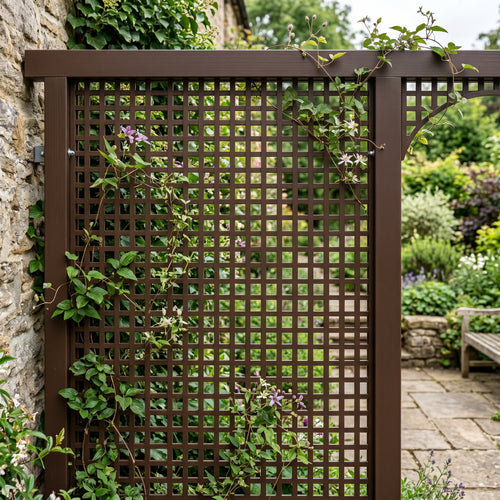
Liquid rubber coating on a wooden fence

Painting a playground slide or recoating the wooden parts of a climbing frame sounds simple — until the paint flakes, splinters or gets licked by children after a year. What counts here is safety, resistance to saliva and above all lasting adhesion under heavy weathering and wear.

Liquid rubber / rubber paint (also called rubberised paint or flexible coating) solves exactly these problems — it stays elastic, is physiologically safe once cured and lasts 8–12 years on wood, much longer than conventional stains or toy paints.

What really matters when painting play equipment

  • Saliva- and sweat-resistant: children touch, lick and bite — the cured coating must be physiologically safe
  • Lightfast: 8+ hours of sun a day in summer — the colour must not fade
  • Splinter-free: no sharp paint flakes may chip off in a fall
  • Elastic: wooden parts move — stains and paints crack, liquid rubber doesn't
  • Slip-resistant: ladders, platforms and steps must give a good grip — no overly smooth surface

What exactly are you painting?

1. Wooden slide or wooden climbing tower

The classic use. Solid timber structures (larch, pressure-treated pine) benefit from an elastic coating that follows the movement of the wood and doesn't flake.

2. Plastic or GRP slide section

Liquid rubber works here too after preparation. On smooth plastic: sand lightly (120 grit), clean with methylated spirit, then apply 2 coats. Note: only on matt surfaces — adhesion can be a problem on high-gloss polyethylene slides, so try a test patch first.

3. Playhouse / children's garden house

Walls, doors, roof shingles — everything coated with one system. The advantages: low cost per m², a uniform look and long maintenance intervals.

4. Timber sandpit surround

Direct ground contact + play sand + UV. Liquid rubber protects much better than wood stain and doesn't flake.

5. Rubber-crumb safety surfacing

If existing safety surfacing has faded, it can be refreshed with liquid rubber in 14 RAL colours. Apply it thinly (max. 1 coat at 100 g/m²) so as not to compromise the cushioning.

Which colours are child-friendly?

All 14 RAL colours of our rubber paint are suitable for playgrounds — they are physiologically safe once fully cured (28 days). Popular colour combinations:

  • Light Blue RAL 5012 + Yellow RAL 1021 — the classic children's combination
  • Green RAL 6005 + Brown RAL 8017 — a natural-looking play area
  • Red-Brown RAL 3009 + Beige RAL 1015 — earthy tones
  • Cherry Red RAL 3005 + White RAL 9003 — eye-catching and sporty

Safety: what to watch during application

  1. Fence off the play equipment first. Children must not use the treated equipment intensively for 28 days, until it has fully cured.
  2. Collect sanding dust during preparation — especially with treated timber, don't let anything fall on the ground.
  3. Keep tools out of reach while you work.
  4. Wait for the drying phases: touch-dry after 2 h, rain-resistant after 6 h, fully cured after 28 days.

Application step by step

  1. Clean the wooden parts, sand off loose stain and fill cracks with wood filler first
  2. Apply the first coat of liquid rubber thinned with 5–10 % water (for better penetration)
  3. Leave to dry for 4 hours
  4. Apply the second coat undiluted
  5. For heavy use: a third coat on grip and standing surfaces

Consumption and sizes

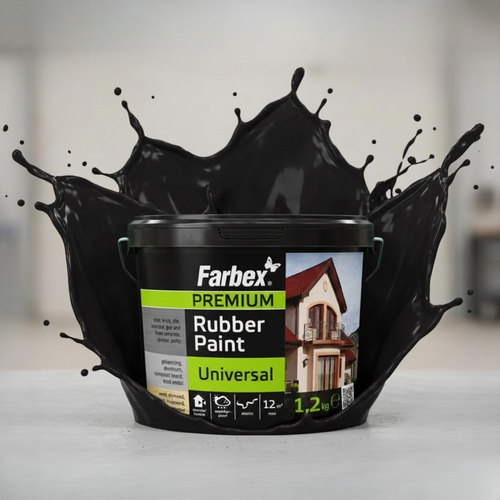
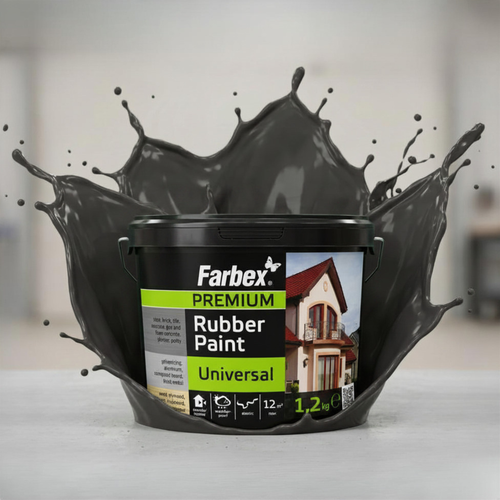
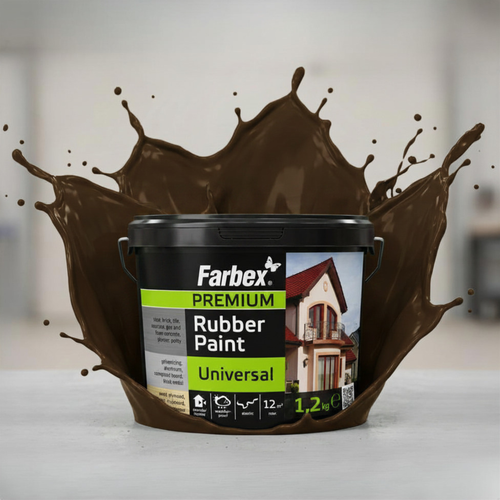
  • 1.2 kg — a sandpit surround, a single slide
  • 3.5 kg — a complete playhouse, a medium climbing frame
  • 6 kg — a large play area, several elements in one colour

Conclusion

For playground slides, wooden climbing towers and children's play equipment, liquid rubber / rubber paint is the ideal choice: physiologically safe once cured, elastic, UV-stable, splinter-free and available in 14 RAL colours. An investment in 8–12 years of protection without tedious upkeep.

See all colours: Rubber paint in 14 RAL colours →


Related terms: Our product is sold in DIY stores and the trade under several names — liquid rubber, liquid rubber paint, liquid membrane, rubber paint, rubberised paint, flexible coating, elastic exterior paint or polymer coating. They all mean the same product: a waterproof, highly elastic coating based on acrylic latex.

menu_book Full guide: wood painting arrow_forward
person

RubberPaint Team

Technical editorial · RubberPaint