Repairing Flat Roof Cracks Without a Torch

In short: you can repair cracks in a flat roof yourself — without a blowtorch or professional equipment. Hairline cracks are covered with two coats of liquid rubber; gaping cracks are first secured with reinforcing fabric. The whole job takes a weekend, with material costs of £7–13/m² for the repaired area. Rain-resistant after 6 hours.
Recognising the two main types of roof crack
Before you repair, you need to know what you're dealing with. Cracks in a flat roof fall into two categories:
Capillary cracks (hairline cracks)
Fine cracks less than 0.5 mm wide, often star-shaped or in a net-like pattern. Cause: ageing of the bitumen covering, UV exposure, thermal movement of the substrate. They aren't leaking yet, but left untreated they grow every year. Repair: apply liquid rubber over the whole area — it bridges cracks up to about 2 mm.
Gaping cracks
Visible gaps from 1 mm wide, often at junctions (parapet, light well, chimney) or in areas of the roof that move. These cracks may leak and need mechanical reinforcement with fabric before being painted over.
Preparation: cleaning and checking the surface
Tools for the repair:
- Broom and pressure washer (or scrubbing brush + water)
- Scraper + cement-free repair filler for roofs
- Reinforcing fabric (glass-fibre fleece, 110 g/m²) — a strip at least 30 cm wide per crack
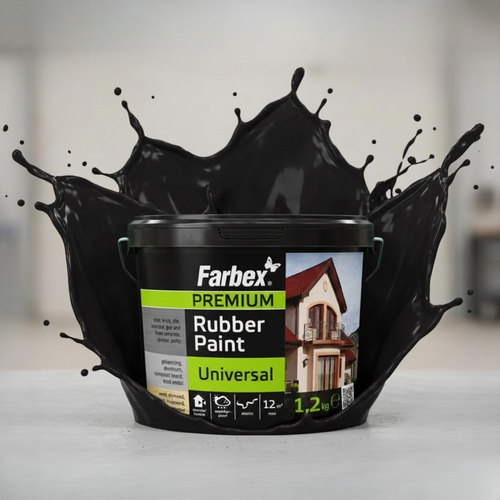
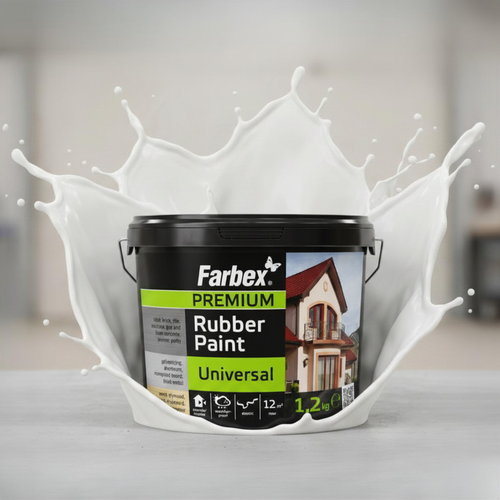
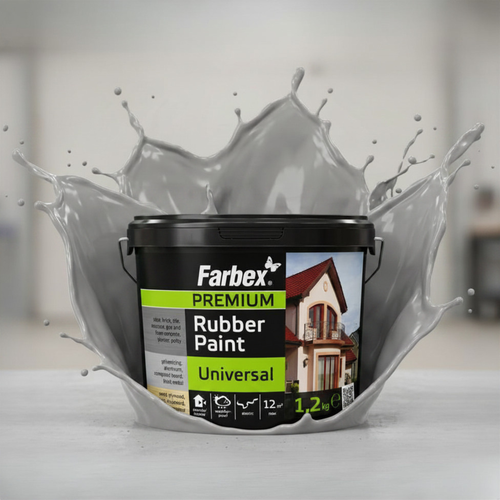
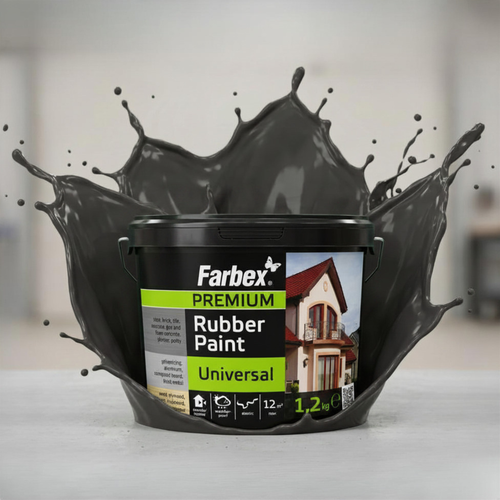
- A tub of liquid rubber — for roofs we recommend RubberPaint Universal in Graphite (RAL 7024): UV-stable, and it covers old coatings cleanly
- 5 cm brush + 25 cm roller (medium-long pile)
Clean the area to be repaired plus about 20 cm all round. Loose bitumen particles, old coatings, moss and algae all have to go. Then leave to dry for at least 24 hours.
Filler + reinforcing fabric for gaping cracks
For cracks wider than 1 mm:
- Open up the crack: use the scraper to open the crack slightly into a V shape (about 1 cm deep). This gives the filler something to grip
- Fill: press in the repair filler and smooth it off. For very deep cracks, work in two layers and let each cure for 24 hours
- Embed the reinforcing fabric: apply a first coat of liquid rubber over the area (at least 10 cm beyond the crack on each side), embed the fabric strip immediately and press it down with the brush — no creases, no air bubbles
- Top coat: after 4 hours of drying, apply a second coat over the embedded fabric
Spot repair or full-surface coating?
That's the key question. Rule of thumb:
- Spot repair makes sense if less than 10 % of the roof area is affected and the rest of the bitumen covering looks intact. Material cost: £4–7/m² of the repaired area
- Full-surface coating is recommended if more than 10 % of the area shows cracks, because further spots will appear within 2–3 years anyway. Material cost: £7–10/m² of the total roof area
A full-surface coating saves money in the long run: once treated completely, the roof lasts another 15–20 years without you finding a new problem spot every year. For the complete guide, see Seal a Flat Roof with Liquid Rubber — Step by Step.
Tests after curing
After 24 hours of drying you can check the repair:
- Water test: simulate heavy rain with a garden hose. Run water onto the repaired spot for at least 15 minutes. Check the ceiling below the roof for drips or damp patches
- Mechanical test: press lightly on the repaired spot with your thumb. The coating must give elastically and spring back immediately — like rubber
- Visual test: look at it in sunlight from different angles. Differences in sheen between the repair and its surroundings are normal and disappear after a few weeks of weathering. Glossy puddles or craters, on the other hand, indicate the coat was applied too thickly
Common mistakes in DIY roof repairs
- Painting onto a damp surface: residual moisture prevents proper curing. Rule of thumb — the roof must be matt-dry; dark patches mean wait
- Simply painting over cracks without fabric: for cracks over 1 mm, a coating alone isn't enough. The fabric is the mechanical reinforcement
- Pro tip: when the outside temperature is above 25 °C, work in the morning — in the sun the bitumen covering heats up to over 50 °C, the material dries out too quickly and doesn't form an elastic membrane
- Spot repair as a permanent solution: if a new spot appears every 2 years, the roof as a whole is at the end of its life. A full-surface renovation saves time and money in the long term
What does the DIY repair cost?
A realistic estimate for 5 m² of repair area with gaping cracks:
- Liquid rubber (1 × 3.5 kg): approx. £40
- Reinforcing fabric (5 m²): approx. £13
- Repair filler: approx. £10
- Tools (brush + roller): approx. £17
- Total material costs: approx. £80 (around £16/m²)
A roofer typically charges £130–215/m² for a spot repair, including call-out. The DIY option is therefore five to ten times cheaper — provided you have a weekend free and feel safe on the roof.
What next?
For a full roof renovation with liquid rubber (also called rubber paint, rubberised paint or flexible coating), our flat roof waterproofing with liquid rubber page has all the quantities and matching products.
Related guides:
- Seal a Flat Roof with Liquid Rubber — Step by Step
- Liquid Rubber vs. Bitumen — The Honest Comparison
- Waterproofing a basement wall from outside
See liquid rubber for roof repairs →
Related terms: Our product is sold in DIY stores and the trade under several names — liquid rubber, liquid rubber paint, liquid membrane, rubber paint, rubberised paint, flexible coating, elastic exterior paint or polymer coating. They all mean the same product: a waterproof, highly elastic coating based on acrylic latex.
RubberPaint EU Team
Technical editorial · RubberPaint