Which Paint Bonds to Rubber? Liquid Rubber for EPDM & Tyres
The question “what paint sticks to rubber?” is one of the most common in DIY. Conventional paints, acrylics and spray paints typically fail on rubber within a few weeks — they flake, crack or come away from the surface. The reason lies in two properties of rubber: high elasticity and low surface energy.
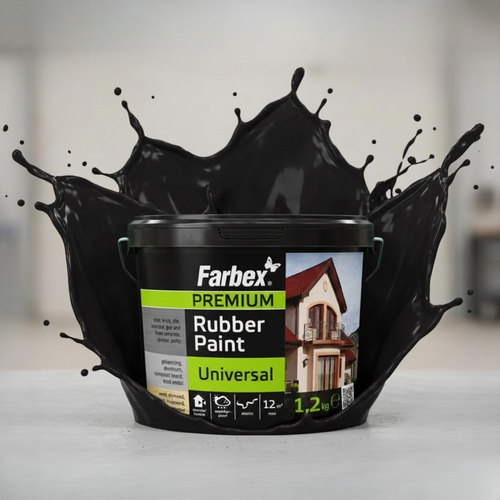
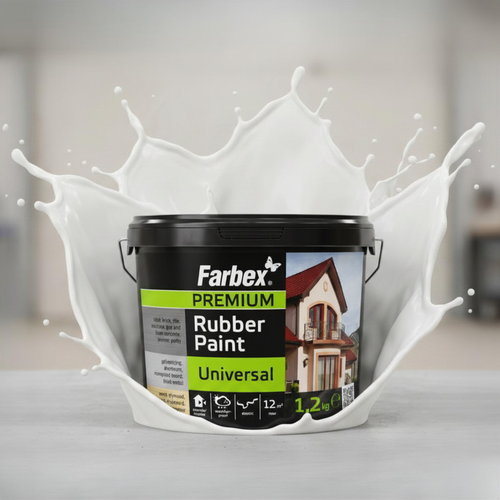
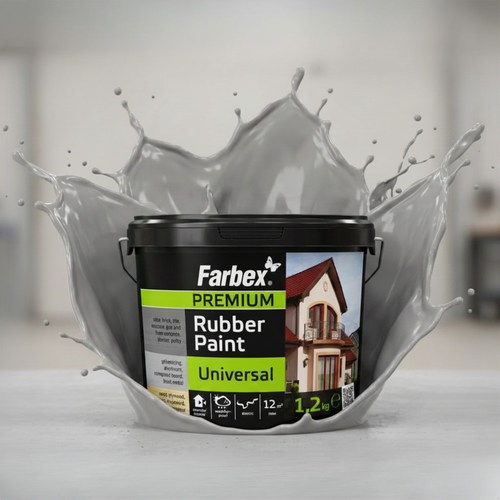
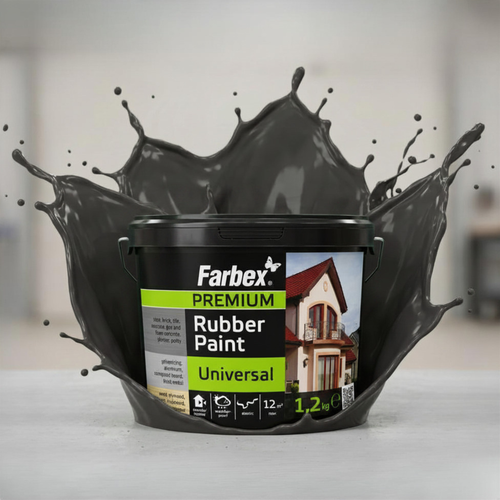
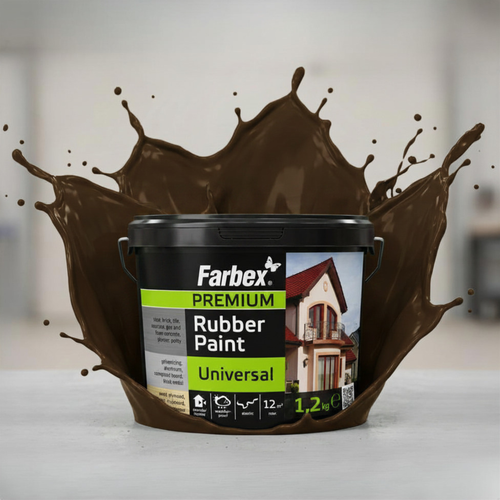
Looking for rubber paint (an elastic, rubber-based paint) rather than a paint for rubber? It's the same product: liquid rubber paint in 14 RAL colours, including White RAL 9003 and Black RAL 9005.
In this guide we show which types of paint actually stick to rubber — and which jobs suit a flexible rubber paint (also called liquid rubber, rubberised paint or flexible coating).
Why normal paint doesn't hold on rubber
Rubber and rubber-like materials (EPDM, natural rubber, synthetic rubber, soft PVC) pose two problems for conventional paints:
- High elongation: rubber deforms with temperature, pressure and mechanical load. Rigid paints (acrylic enamel, alkyd) crack at even minimal stretch.
- Low surface energy: solvents and pigments can't penetrate the surface because rubber is practically non-polar. The result: no adhesion.
Which types of paint work on rubber?
1. Liquid rubber / rubber paint (acrylic-latex base)
Liquid rubber coatings formulated on an acrylic-latex base are the only system that bonds directly to almost all rubber surfaces — including old EPDM roofs, rubber-bonded playground surfacing and rubber flooring. The advantage: it stretches with the substrate (elongation > 300 %).
2. Special primer + 2K polyurethane
A high-end solution for industrial use — but expensive, with a pot life and a mixing ratio to manage. Rarely practical for DIY.
3. Vinyl paint after keying the surface
Works to a limited extent on hard rubber (e.g. tyre sidewalls), not on soft rubber.
4. Tyre paint and tyre shine (care products)
Aerosol sprays for car tyres that improve the look for a short time — not a real coating, and it lasts a few months at most.
Practical uses — when rubber paint pays off
Giving an EPDM flat roof a new colour
Old EPDM membrane looks dull and faded after some years. Instead of replacing the whole roof covering (very expensive), you can paint over the membrane with liquid rubber. Preparation: clean thoroughly, key the surface if needed, then apply 2 coats — a new look, plus extra UV protection and 10+ years of added service life.
Recolouring playground safety surfacing
Rubber-crumb safety surfacing on playgrounds loses its colour after 5–8 years. Liquid rubber in the colour of your choice refreshes it — but the surface must stay elastic, so don't apply it too thickly or the impact protection is reduced.
Rubber floors in workshops and garages
Rubber floors in workshops and garages can be recoloured or repaired with liquid rubber. It is also suitable for floor markings and safety walkways.
Rubber thresholds and door seals around the house
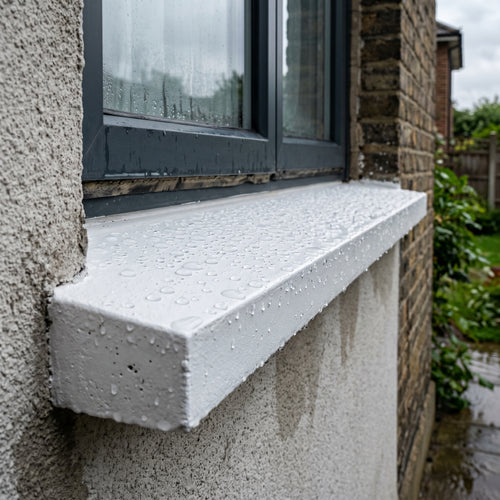
Old rubber door seals and window-sill thresholds can be painted over after thorough cleaning — it brings back their appearance.
What rubber paint can NOT do on rubber
- Permanently recolour car tyres — the mechanical and thermal stress of driving exceeds what any paint coating can take.
- Coat the inside of rubber parts (e.g. the inner tyre wall) — not a real use case, as there is no UV light and no need for a good look there.
- Fresh natural rubber sheet with release-agent residue — it must be cleaned first, otherwise adhesion suffers.
Preparation for use on rubber
- Clean thoroughly — water and washing-up liquid, then rinse with clean water. On old surfaces: pressure washer at max. 100 bar.
- Remove release agent and grease — isopropanol or methylated spirit; test on an inconspicuous spot first.
- Key the surface (optional) — on smooth rubber, sanding with 80–120 grit noticeably improves adhesion.
- Apply the first coat thinly — thinned with 5–10 % water so it works into the surface.
- Second coat undiluted once the first has dried (at least 4 hours).
Conclusion: what paint sticks to rubber?
The short answer: acrylic-latex liquid rubber is the only coating that bonds reliably to rubber, natural rubber and EPDM — provided the surface is clean, grease-free and, where needed, keyed. Conventional paints fail because of the difference in elasticity and poor adhesion.
Product: Liquid rubber paint in 14 RAL colours →
Related terms: Our product is sold in DIY stores and the trade under several names — liquid rubber, liquid rubber paint, liquid membrane, rubber paint, rubberised paint, flexible coating, elastic exterior paint or polymer coating. They all mean the same product: a waterproof, highly elastic coating based on acrylic latex.
RubberPaint Team
Technical editorial · RubberPaint