Can You Paint EPDM Rubber Roofing? Yes — Here's How

If your EPDM rubber roofing has been in place for 10+ years and is looking faded, cracked at the seams, or simply tired, you might be wondering: can you paint EPDM roofing?
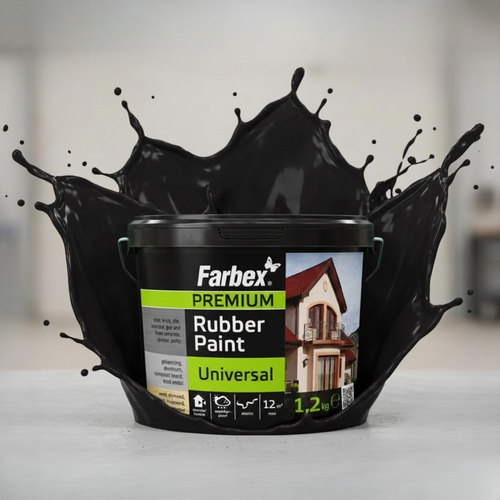
The short answer is: yes, with the right product. EPDM (ethylene propylene diene monomer) is a synthetic rubber that classic paints cannot adhere to — but liquid rubber paint, formulated specifically to bond to rubber substrates, restores the appearance and extends the roof's life by 10+ years.
Why classic paints fail on EPDM
EPDM has two properties that make it incompatible with traditional paint:
- Low surface energy: rubber is non-polar, so water-based and solvent-based paints cannot wet the surface properly. They form droplets instead of a continuous film.
- High elasticity: EPDM expands and contracts significantly with temperature changes. Rigid paint films crack within months.
The result of using regular paint on EPDM: bubbles, flakes, and complete failure within a season.
What liquid rubber paint does differently
Liquid rubber paint on an acrylic-latex base is formulated to:
- Wet the EPDM surface through specific surfactants and adhesion promoters
- Flex with the substrate — over 300% elongation matches EPDM's own expansion behaviour
- Cure into a continuous rubber membrane that is mechanically bonded to the EPDM
The result is a seamless, flexible coating that looks like a new EPDM membrane and protects the original from UV degradation, which is the main aging mechanism.
When should you paint EPDM rubber roofing?
- Aesthetic refresh — the colour has faded or chalked
- Minor surface cracking from UV (not seam failure)
- Small leaks at seams that you've already patched but want to seal permanently
- Cool-Roof upgrade — applying white liquid rubber over dark EPDM reduces summer heat gain by 30%+
- Compatibility with adjacent surfaces — matching colours with siding or trim
You should not paint EPDM if: seams have completely separated, the membrane is torn, or there is standing water deeper than 25 mm. Those issues need repair first.
Surface preparation: critical for success
Step 1: Pressure wash
Remove all dirt, biological growth, and any chalked surface particles. Use moderate pressure (80–100 bar) — too much pressure can damage EPDM. Allow 24+ hours to dry completely.
Step 2: Solvent wipe
Wipe the entire surface with isopropyl alcohol or methylated spirits using lint-free cloths. This removes any residual mould-release agents (which are present on factory-new EPDM) or surface contamination.
Step 3: Light abrasion (optional, for older EPDM)
For 15+ year old EPDM, lightly scuff the surface with a green Scotch-Brite pad. This opens up the surface and significantly improves adhesion. Not necessary for younger EPDM.
Step 4: Seam reinforcement
Apply a band of liquid rubber along every seam, embed polyester reinforcement fleece (60 g/m²), then encapsulate with a second band of rubber. This creates a reinforced seam that resists future movement.
Application
- First coat (diluted): mix in 5–10% water for better penetration into the EPDM surface. Apply at about 150 g/m² with a lambswool roller (12 mm pile).
- Wait 4 hours minimum. The first coat should be touch-dry but not fully cured.
- Second coat (undiluted): apply at right angles to the first coat for full coverage. About 150 g/m² consumption.
- Allow to cure for 6 hours before rain. Foot traffic OK after 24 hours; full cure in 28 days.
How long does painted EPDM last?
The original EPDM membrane is the structural waterproofing layer. The liquid rubber paint protects it from UV (the main degradation mechanism) and adds a sacrificial layer that can be refreshed every 10–15 years without removing previous coats.
Practical outcome: a 10-year-old EPDM roof with declining performance can be brought back to as-new condition with one coating application, and maintained indefinitely with simple recoats every 12–15 years.
Common questions
Can I paint white over black EPDM for a Cool-Roof effect?
Yes — and the temperature reduction can be dramatic. Surface temperatures on south-facing EPDM in summer commonly reach 70 °C; with white liquid rubber coating, this drops to 35–45 °C. This reduces cooling load on the building below by 15–30%.
How does it compare to professional EPDM replacement?
EPDM replacement: €60–80 per m² installed, full disruption, removes any chance of leak through new seams. Liquid rubber recoat: €3–5 per m² in materials, DIY-able, seals all existing seams while preserving the original membrane.
Does paint void the EPDM warranty?
For most original EPDM warranties: yes, applying coatings is not permitted while the warranty is active. After warranty expiry (typically 10–20 years), coating is a sensible alternative to replacement.
Conclusion
You can paint EPDM rubber roofing — but only with liquid rubber paint specifically designed for rubber substrates. With proper preparation (clean, dry, lightly abraded, seam-reinforced), the result is a flexible, watertight coating that restores aesthetics and adds 10+ years of life at a fraction of replacement cost.
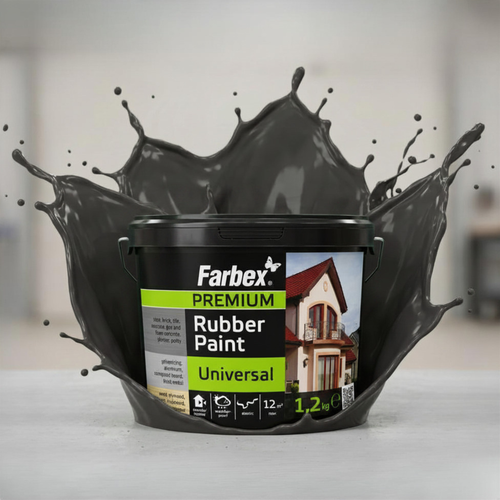
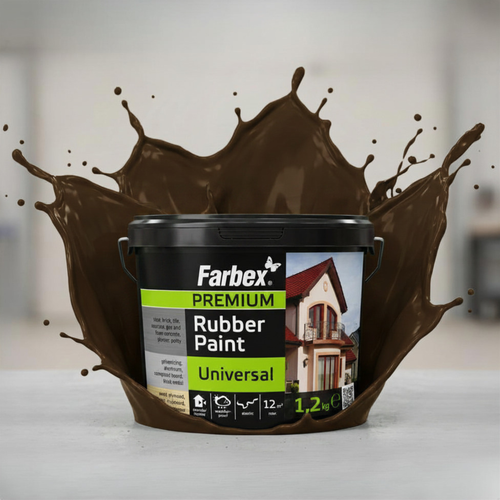
Products for EPDM: Liquid rubber paint, 14 colours →
RubberPaint Team
Technical editorial · RubberPaint